CLOSE [X]
ポストプロダクション、私のひとりごと
1982年、YMOやUKのエレクトロポップに心酔し、最初に手に入れたシンセはコルグのMS-10。これ一台で何をしていいのかが分からず、ただ途方に暮れていた。親の転勤で相模原から広島の三原という小さな町に引っ越すことになり、田舎での高校生活が始まり、やたらとアルバイトをしまくって、1984年頃にはPROPHET600や、TR-808などいくつかの機材は手に入れたものの、今のパソコンみたいに簡単じゃなくて、MC-202なんかひとつのパートを数字入力するのに半日かかったり、多重録音(マルチ録音)となると最初に同期用の信号を録音してからTR-808とMC-202を同期させるわけだが、テープのスピードを変えると、テンポも一緒に変わる…そんな「電気の生々しさ」に驚きながら、ツマミを回してた。
1991年、シンセと格闘する毎日を送っていたところに、中学時代の友人で表参道で美容師をやっているK君がやってきて「こんなに曲作れるなら、こんな処にいちゃだめだわ。キミはハウスやんなよ」そのひと言がハウスをはじめるきっかけに。当時DJとしても活動していたK君の世田谷のマンションに転がり込んで、そこで聴かされたフランキー、モラレス、トッド・テリー、C+Cなど90’sハウス黄金期の音に触れて、いつの間にか自分もハウスを作るようになっていた。ライブハウスに出るよりも、クラブでライブをやるのがおしゃれだった時代、 KLF、オービタル、ジオーブにハマってたな。
1992年にはすでに拠点を東京に移し、Guerrilla、FNAC、WARPなんかに影響され、ミニマルで地味だけどすごいパワーのある「かっこいい暗さ」を求めて、デモを作ってはレーベルへと送っていたある日、レコード店でMurk Boysのリミックス盤に出会った。お世辞にも洗練されているとは言い難い無骨なデザインのラベルだったが、そのラベルに記されたHot Productions(マイアミ)の名に直感的にデモを送った。後日、初リリースの連絡が来て、リリースするためHot Productions内に急造されたのが Mo' Rhythmレーベルだ。こうして1994年から1996年にかけ、マイアミを拠点とした活動が始まった。
自身のリリースに加え、CerroneやT-Connectionといったレジェンドのリミックスも、依頼されるがまま手がけていった。制作の拠点は、旗の台のアパートの片隅の「Daidokoro Studio」。メインサンプラーのAKAI S3000はメモリーがわずか4MBしかなく、次々に送られてくるリミックスの依頼に応えるため、一旦TASCAM 33-8のテープに音を落としてはサンプリングを重ねていく、アナログとデジタルの往復で制約を克服していった。
そうして出来上がった Cerrone "Love and Be Loved"、T-Connection "Any Way You Want It"、といったリミックスが1994年9月の米 Billboard誌に「Kenji Etoのポストプロダクション」として紹介された。Hot ProductionsからFAXで送られてきた記事を手に、渋谷のタワーレコードへ本物のBillboardを買いに走ったのは、今となっては遠い記憶だ。ネットが普及していない当時、遠い海外での評価を肌で感じることもなく、淡々とした日々の中の出来事だったが、あの「台所」から生まれた音は、確かに海を越えてリスナーへ届いていた。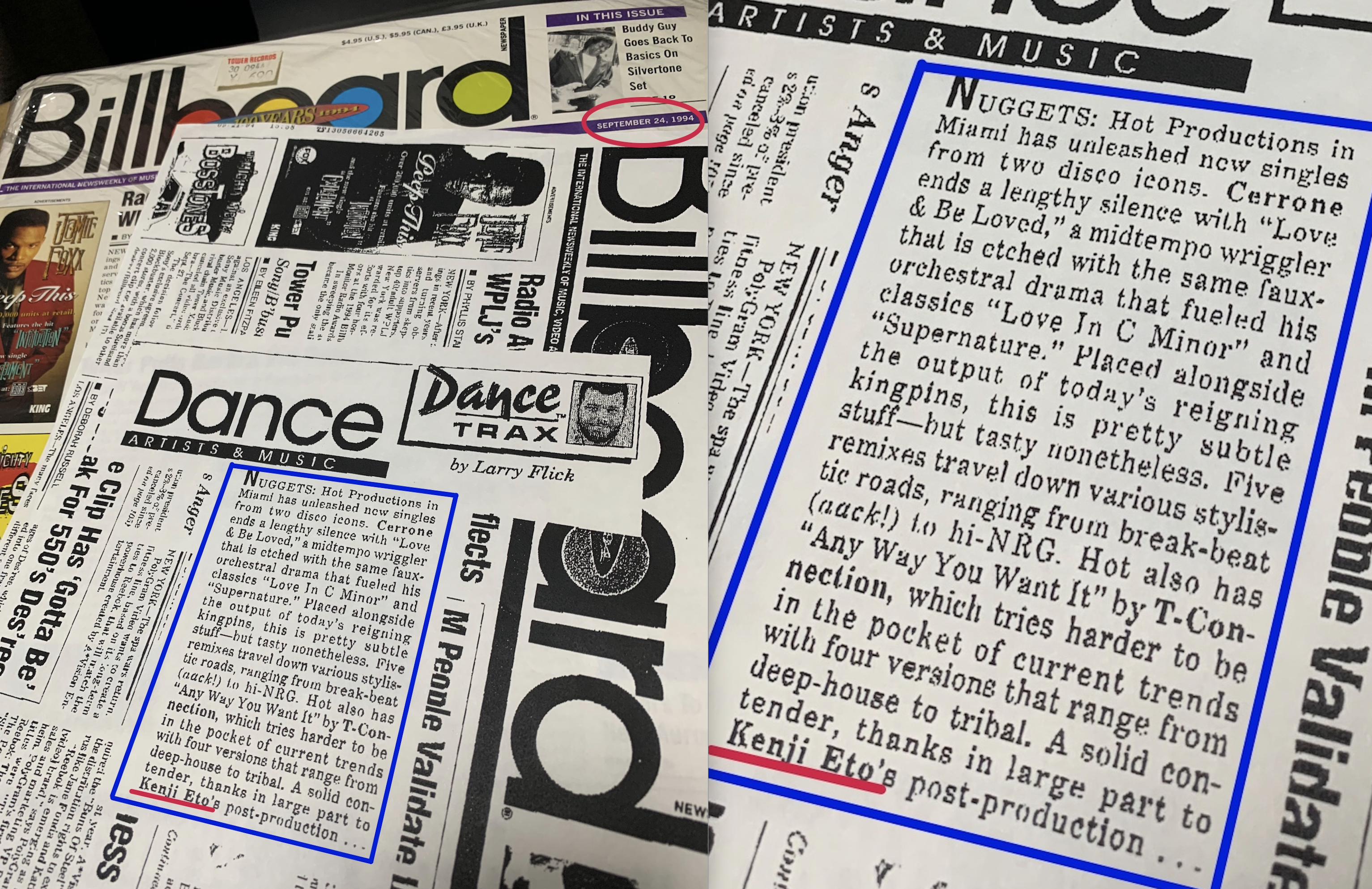
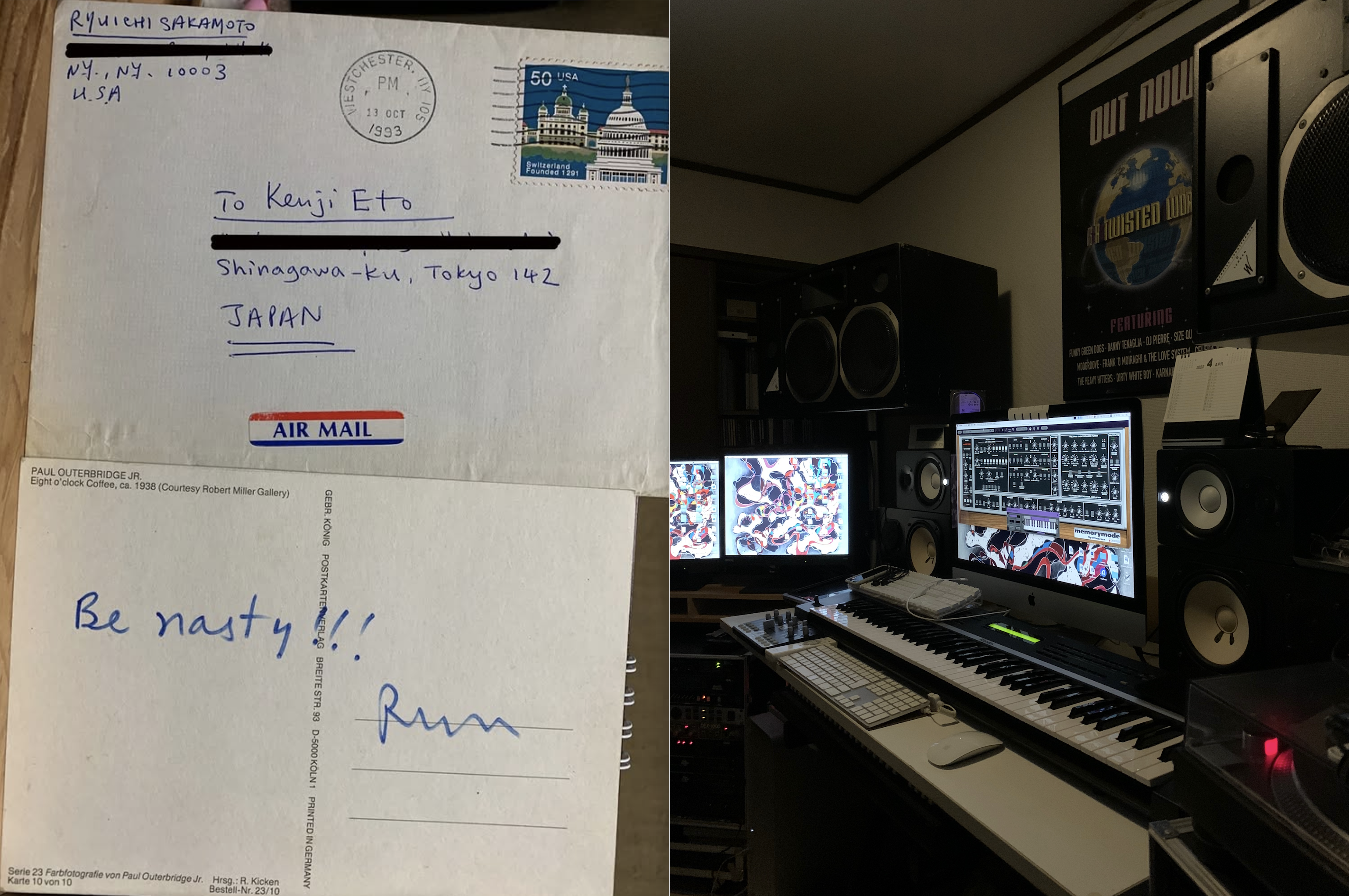
また1993年ごろ、意を決してニューヨークの坂本龍一氏に『Dark Room』と『Groover』のデモテープを送った。そしてある日、ポストに届いていたのは「聴いたよ」という直筆のポストカード。あの時の言葉にならない驚き……。一人のリスナーとして、作り手として、あの瞬間、自分の音楽が確かに外の世界とリンクしたのを感じた。
近年、SNSで高価な機材が並んでいるような画像を見ると、なんだか「何か違う」と思ったり、今はハードウェアを買い揃えることもなくなったなぁ。自分が求めているのは、もうちょっとなんか怖くて中身のある音というか. 良いんだか悪いんだかわからない音なんて言われることもあるけれど、それが自分の40年以上の格闘の跡。1992年から続く、Moogrooveという名の独り言です。
1991年、シンセと格闘する毎日を送っていたところに、中学時代の友人で表参道で美容師をやっているK君がやってきて「こんなに曲作れるなら、こんな処にいちゃだめだわ。キミはハウスやんなよ」そのひと言がハウスをはじめるきっかけに。当時DJとしても活動していたK君の世田谷のマンションに転がり込んで、そこで聴かされたフランキー、モラレス、トッド・テリー、C+Cなど90’sハウス黄金期の音に触れて、いつの間にか自分もハウスを作るようになっていた。ライブハウスに出るよりも、クラブでライブをやるのがおしゃれだった時代、 KLF、オービタル、ジオーブにハマってたな。
1992年にはすでに拠点を東京に移し、Guerrilla、FNAC、WARPなんかに影響され、ミニマルで地味だけどすごいパワーのある「かっこいい暗さ」を求めて、デモを作ってはレーベルへと送っていたある日、レコード店でMurk Boysのリミックス盤に出会った。お世辞にも洗練されているとは言い難い無骨なデザインのラベルだったが、そのラベルに記されたHot Productions(マイアミ)の名に直感的にデモを送った。後日、初リリースの連絡が来て、リリースするためHot Productions内に急造されたのが Mo' Rhythmレーベルだ。こうして1994年から1996年にかけ、マイアミを拠点とした活動が始まった。
自身のリリースに加え、CerroneやT-Connectionといったレジェンドのリミックスも、依頼されるがまま手がけていった。制作の拠点は、旗の台のアパートの片隅の「Daidokoro Studio」。メインサンプラーのAKAI S3000はメモリーがわずか4MBしかなく、次々に送られてくるリミックスの依頼に応えるため、一旦TASCAM 33-8のテープに音を落としてはサンプリングを重ねていく、アナログとデジタルの往復で制約を克服していった。
そうして出来上がった Cerrone "Love and Be Loved"、T-Connection "Any Way You Want It"、といったリミックスが1994年9月の米 Billboard誌に「Kenji Etoのポストプロダクション」として紹介された。Hot ProductionsからFAXで送られてきた記事を手に、渋谷のタワーレコードへ本物のBillboardを買いに走ったのは、今となっては遠い記憶だ。ネットが普及していない当時、遠い海外での評価を肌で感じることもなく、淡々とした日々の中の出来事だったが、あの「台所」から生まれた音は、確かに海を越えてリスナーへ届いていた。
また1993年ごろ、意を決してニューヨークの坂本龍一氏に『Dark Room』と『Groover』のデモテープを送った。そしてある日、ポストに届いていたのは「聴いたよ」という直筆のポストカード。あの時の言葉にならない驚き……。一人のリスナーとして、作り手として、あの瞬間、自分の音楽が確かに外の世界とリンクしたのを感じた。
近年、SNSで高価な機材が並んでいるような画像を見ると、なんだか「何か違う」と思ったり、今はハードウェアを買い揃えることもなくなったなぁ。自分が求めているのは、もうちょっとなんか怖くて中身のある音というか. 良いんだか悪いんだかわからない音なんて言われることもあるけれど、それが自分の40年以上の格闘の跡。1992年から続く、Moogrooveという名の独り言です。
Profile 江藤健二(aka Moogroove)
1967年生まれ。高校時代、電子音楽の先駆者たちに影響を受け、独自の音楽探求を開始。1982年から10年に及ぶアマチュア活動の中で、アナログ機材や多重録音を駆使し、音作りに没頭し、自らのスタイルを練り上げていった。その後1993年ごろに制作した『Dark Room』『Groover』などが米・マイアミの Mo Rhythm Recordsからリリースされ、国内外のDJから知る人ぞ知る作り手として認知されるようになる。
その後、坂本龍一、サトシ・トミイエ(富家哲)ら革新的なアーティストとの交流を持ちながらも、自身によって国際的なネットワークを築き、海外レーベルからのリリースを重ねた。1997年には、ハウス~クラブ・ミュージックの世界の大手レーベルであるTwisted America Records(MCA/Universal)にデモ音源を送り続けた末、作品リリースが実現。国際的なクラブシーンにおいても高い評価を受けた。
2021年には、英国の名門コンピレーションシリーズ「Fabric Presents Danilo Plessow / MCDE」に、初期作『Dark Room』がデジタルリマスタリングで収録。90年代に制作された作品が、現代のクラブミュージックシーンにも新たなインパクトを与え、若い世代からも支持を受けている。現在は独立した創作活動を維持し、自身のサイトやSNSを通じて音を発信し続けている。
その後、坂本龍一、サトシ・トミイエ(富家哲)ら革新的なアーティストとの交流を持ちながらも、自身によって国際的なネットワークを築き、海外レーベルからのリリースを重ねた。1997年には、ハウス~クラブ・ミュージックの世界の大手レーベルであるTwisted America Records(MCA/Universal)にデモ音源を送り続けた末、作品リリースが実現。国際的なクラブシーンにおいても高い評価を受けた。
2021年には、英国の名門コンピレーションシリーズ「Fabric Presents Danilo Plessow / MCDE」に、初期作『Dark Room』がデジタルリマスタリングで収録。90年代に制作された作品が、現代のクラブミュージックシーンにも新たなインパクトを与え、若い世代からも支持を受けている。現在は独立した創作活動を維持し、自身のサイトやSNSを通じて音を発信し続けている。
Personal Reflections...
In 1982, the first synthesizer I ever bought was a Korg MS-10. I remember feeling completely lost, staring at this single machine without a clue of what to do with it. By 1984, I had gathered gear like the Prophet-600, TR-808, and MC-202. Programming a single part into the MC-202 could take half a day. To sync the TR-808 and MC-202, I had to record sync signals onto tape—if the tape speed drifted, the tempo drifted with it. It was a world of "raw electricity."
In 1991, everything changed when my friend "K-kun" paid me a visit. He told me, "If you can make music like this, you shouldn't be here. You need to start making House". That one sentence was the catalyst. I ended up crashing at his apartment in Setagaya where I was exposed to the golden era of 90s House: Frankie Knuckles, Morales, Todd Terry. Before I knew it, I was producing House music myself.
I eventually moved to Tokyo, and while searching for my ideal sound, I came across a Murk Boys remix at a record shop. Seeing the name "Hot Productions" on the label, I followed my gut and sent them a demo tape. Soon after, I received word of my first release on the Mo' Rhythm label. It marked the beginning of my Miami-based activities from 1994 to 1996.
Alongside my own releases, I began taking on remix requests for legends like Cerrone and T-Connection. My production base was "Daidokoro Studio," set up in my apartment in Hatanodai. My main sampler, the Akai S3000, had only 4MB of memory. To handle the flood of remix offers, I had to bounce sounds to a TEAC 33-8 tape recorder and re-sampling them—a constant journey back and forth between analog and digital.
The result of that labor was featured in the September 1994 issue of Billboard magazine in the US, recognizing the "contribution of Kenji Eto's post-production". I still remember racing to Tower Records in Shibuya, holding a fax from the label, just to buy a physical copy of that Billboard. At the time, it just felt like part of my quiet, daily routine; I didn't truly feel the weight of the acclaim. But the sounds born in that "kitchen" had certainly crossed the ocean and reached listeners far away.
Around 1993, I also worked up the nerve to send a demo tape to Ryuichi Sakamoto in New York. One day, a handwritten postcard arrived in my mailbox saying, "I listened to it". The shock I felt in that moment was beyond words. Both as a listener and a creator, I felt my music truly connect with the world outside for the first time.
Lately, when I see photos on social media of studios filled with expensive gear, I can’t help but feel that something is "off," and I’ve stopped collecting hardware myself. What I’m looking for now is a sound that’s a bit more haunting, something with real substance. People sometimes say my sound is hard to define—they’re not sure if it’s "good" or "bad"—but it is the trace of my 40-year struggle. It is a monologue under the name Moogroove, continuing since 1992.
In 1982, the first synthesizer I ever bought was a Korg MS-10. I remember feeling completely lost, staring at this single machine without a clue of what to do with it. By 1984, I had gathered gear like the Prophet-600, TR-808, and MC-202. Programming a single part into the MC-202 could take half a day. To sync the TR-808 and MC-202, I had to record sync signals onto tape—if the tape speed drifted, the tempo drifted with it. It was a world of "raw electricity."
In 1991, everything changed when my friend "K-kun" paid me a visit. He told me, "If you can make music like this, you shouldn't be here. You need to start making House". That one sentence was the catalyst. I ended up crashing at his apartment in Setagaya where I was exposed to the golden era of 90s House: Frankie Knuckles, Morales, Todd Terry. Before I knew it, I was producing House music myself.
I eventually moved to Tokyo, and while searching for my ideal sound, I came across a Murk Boys remix at a record shop. Seeing the name "Hot Productions" on the label, I followed my gut and sent them a demo tape. Soon after, I received word of my first release on the Mo' Rhythm label. It marked the beginning of my Miami-based activities from 1994 to 1996.
Alongside my own releases, I began taking on remix requests for legends like Cerrone and T-Connection. My production base was "Daidokoro Studio," set up in my apartment in Hatanodai. My main sampler, the Akai S3000, had only 4MB of memory. To handle the flood of remix offers, I had to bounce sounds to a TEAC 33-8 tape recorder and re-sampling them—a constant journey back and forth between analog and digital.
The result of that labor was featured in the September 1994 issue of Billboard magazine in the US, recognizing the "contribution of Kenji Eto's post-production". I still remember racing to Tower Records in Shibuya, holding a fax from the label, just to buy a physical copy of that Billboard. At the time, it just felt like part of my quiet, daily routine; I didn't truly feel the weight of the acclaim. But the sounds born in that "kitchen" had certainly crossed the ocean and reached listeners far away.
Around 1993, I also worked up the nerve to send a demo tape to Ryuichi Sakamoto in New York. One day, a handwritten postcard arrived in my mailbox saying, "I listened to it". The shock I felt in that moment was beyond words. Both as a listener and a creator, I felt my music truly connect with the world outside for the first time.
Lately, when I see photos on social media of studios filled with expensive gear, I can’t help but feel that something is "off," and I’ve stopped collecting hardware myself. What I’m looking for now is a sound that’s a bit more haunting, something with real substance. People sometimes say my sound is hard to define—they’re not sure if it’s "good" or "bad"—but it is the trace of my 40-year struggle. It is a monologue under the name Moogroove, continuing since 1992.
Profile: Kenji Eto (aka Moogroove)
Born in 1967. Influenced by electronic music pioneers during his high school years, Kenji Eto began his own deep exploration of sound. Over a decade of amateur activity, he refined a singular, personal style. Around 1993, his tracks "Dark Room" and "Groover" were released on Miami-based Mo' Rhythm Records, earning him recognition among DJs worldwide as a cult-favorite producer.
While engaging with innovative artists like Ryuichi Sakamoto and Satoshi Tomiie, he independently built an international network and continued to release music on global labels. In 1997, after persistently sending demos to Twisted America Records (MCA/Universal)—a titan of the house and club music world—he achieved a release on the label, garnering high acclaim within the international club scene.
In 2021, his early masterpiece "Dark Room" was digitally remastered and featured in the prestigious British compilation series "Fabric Presents Danilo Plessow / MCDE." His work from the 90s continues to make a fresh impact on the modern club scene, gaining support from a new generation of listeners. Today, he maintains his independent creative practice, sharing his sound through his official website and social media.
While engaging with innovative artists like Ryuichi Sakamoto and Satoshi Tomiie, he independently built an international network and continued to release music on global labels. In 1997, after persistently sending demos to Twisted America Records (MCA/Universal)—a titan of the house and club music world—he achieved a release on the label, garnering high acclaim within the international club scene.
In 2021, his early masterpiece "Dark Room" was digitally remastered and featured in the prestigious British compilation series "Fabric Presents Danilo Plessow / MCDE." His work from the 90s continues to make a fresh impact on the modern club scene, gaining support from a new generation of listeners. Today, he maintains his independent creative practice, sharing his sound through his official website and social media.
SYNC RECORD: A postcard from Ryuichi Sakamoto (1993)
and the current Moogroove Studio.
CLOSE [X]